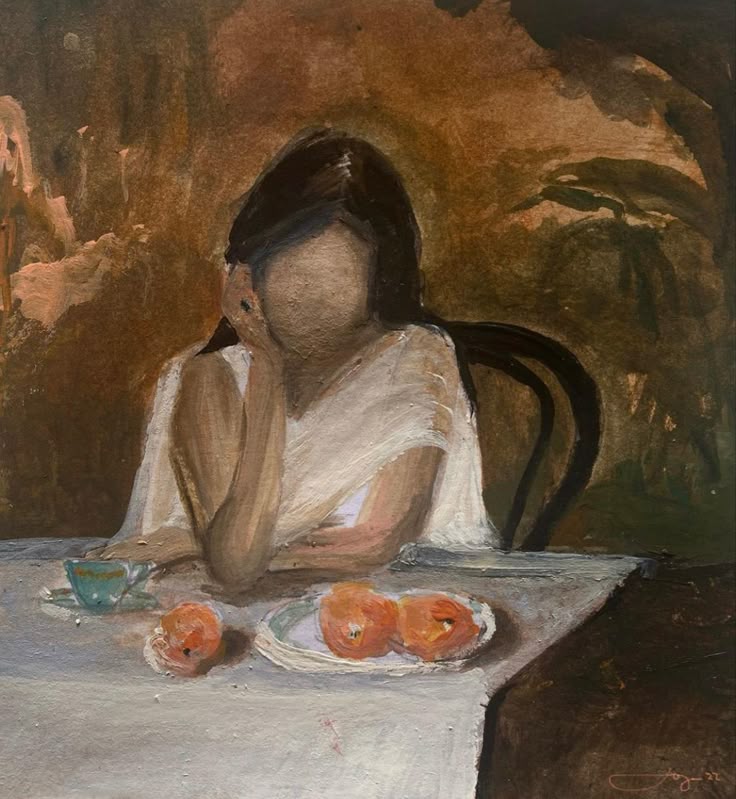
Unsaid
Letter 1 – Ruhi
Addressee: Her late Abba
Abba,
I don’t know why I’m writing this. You’re not going to read it. But something in me needed to talk to you – maybe just once, properly, without pretending I’m fine all the time. I wanted to write last month, and the month before that, but every time I sat down, I couldn’t. Saying your name out loud still makes my chest feel like it’s caving in.
It’s raining again today. Not the heavy kind that drums on the chhat, but the slow, steady kind that turns the air thick and restless. Everything smells like wet earth and chai. The house is too quiet lately. Maybe it always was – but now that it’s me and her, the stillness feels heavier. Like the walls are waiting for someone else to come home.
She asks about you sometimes. Not in big ways – just small, sharp questions, like whether you liked chini in your chai, or if your favourite Surah was really Al-Baqarah, or if I’m just making that up. I never know how to answer. I say whatever sounds softest. I don’t think she remembers your voice anymore. Sometimes I play the old video from our last Eid together, just so she can hear you laugh. I keep the volume low, like it’s something we’re not supposed to disturb.
Khala came again yesterday. She brought halwa and smiled too much – the kind of smile that hides things. She kept saying how much I’ve grown, how “it’s time,” and how she knows of a boy who’s doing well in Tunisia. I nodded through most of it. I don’t think she noticed when my hands started shaking. I kept my eyes on the tea tray, watching how the steam clung to the rim of the glass. She didn’t mention you. Not even in passing. As if grief comes with an expiry date.
Sometimes I wonder if I’m being selfish – saying no when everyone’s expecting a yes. When they say things like, “You don’t have to love him – love comes later,” I feel something shrivel inside me. Love isn’t something you can add like hara dhania, it’s not a garnish sprinkled at the end. They keep talking about security, about stability. But no one asks what I want. Not really. And when they do, I don’t even know how to answer without sounding ungrateful. Or strange.
You were the only one who asked me real questions. Not just “Did you eat?” or “Did you read your namaz?” – but things like: “What kind of world do you want to live in?” I didn’t always have answers back then, but I liked that you thought I might. I try to imagine what you’d say now. Would you tell me to wait? To say no? To pack a bag and run? Some days, I hear your voice – but it’s just my own thoughts, pretending to be brave.
She watches me, you know. Not in the obvious ways. But in the quiet ones. Like when I leave a room during a conversation, or when I fold my dupatta a certain way. She copies things without meaning to. And I wonder what she’s learning just by watching me stay quiet. That silence is safer? That women are meant to bend, and nod, and never choose for themselves? I don’t want her to grow up thinking strength looks like silence. I’m not sure what the alternative is.
Sometimes, I think about what it would feel like to just disappear for a while. Not forever – just long enough to feel quiet again, like the inside of my head isn’t always buzzing. Maybe I’d go north to Hunza or find some tiny village near the Skardu lakes – somewhere no one knows who I’m supposed to be. I’d read until my eyes hurt and eat things I’ve never tasted and sleep until I missed the sun. Just to remember what it feels like to be a person – not someone’s daughter, or responsibility, or problem.
Then I feel bad for even thinking it. Like I’m betraying something – you, maybe. Or her. As if wanting more means I’m not grateful for what I already have. But Abba, I’m tired of moulding myself to what others expect of me. I’m tired of being called strong just because I don’t cry in front of people. Strength isn’t silence. You used to say that. But no one else seems to remember.
I think I’m done pretending. I don’t want to nod and smile through another rishta meeting or wear fancy shalwar kameez that makes me look like someone I’m not. I don’t want to explain why I like to be alone, or why I haven’t said yes yet. I just want to be allowed to be. Maybe that’s not brave. Maybe it’s just me finally saying the truth out loud.
She asked me last night if you can still hear us. I didn’t know what to say. I wanted to tell her that maybe people don’t completely disappear – that bits of them stay behind, in stories, in the smell of Kashmiri chai, in the way I braid her hair the same way you used to do mine. But the words wouldn’t come. I just tucked her in and stayed beside her until she fell asleep. Maybe that was enough.
I don’t know if this letter will go anywhere. Maybe I’ll fold it up and slip it inside your old wallet – the one I keep in my drawer, still smelling faintly of your ittar and dust.
Or maybe I’ll burn it, just to watch something vanish on purpose for once.
Writing to you feels like talking to the sky – like throwing my voice into something too wide to hold it. But it helped. Somehow, it helped.
I don’t know what’s going to happen next. I’m still scared. But I think I’m done waiting for permission to feel what I feel. I’ll try to be the kind of woman you wouldn’t have had to explain twice. The kind who says no when she means no – and stays soft anyway.
I miss you. Every day.
Ruhi
I miss you. Every day.
Ruhi
—
Letter 2 – Hind
Addressee: Her late brother
Yasin akh,
I don’t know where this letter is going. Or if it’s going anywhere at all. There’s no address. No name on the envelope. Just yours, scribbled in pencil – fading a little more every time I take it out. Some days, I write to feel close to you. Other days, I write just to keep from screaming. Today… I don’t really know what I’m doing. The air outside smells like burnt plastic and tear gas. Again.
I still hear the knock. Not even a bang – just a knock. Soft, like they were asking to borrow meramiyeh. You were halfway through your tea. I hadn’t even finished laying out the bread. Then they dragged you out, face down on the street, with your hands behind your back like you were some kind of animal. I remember the look in your eyes – not fear exactly – more like you were trying to protect us with your silence. The blood on your lip was already there before they hit you. They didn’t care who was watching.
After they took you, the house felt too clean. Like everything had been wiped down and bleached of you. But your tea was still on the table – steam rising, lip mark on the rim. There was blood on the tiles outside. It stayed there for days, soaked into the cracks. I scrubbed until my knuckles split. Not because I wanted it gone – I just didn’t know what else to do with my hands.
She hasn’t said your name in weeks. Just sits by the broken window with your old phone, playing the voice notes you used to send. Sometimes she wraps herself in your keffiyeh and lies down under the table – the one we’ve turned into a shelter since the roof cracked. I can’t tell if she’s hiding or pretending.
Two nights ago, I found her shaking under the table again. A shell hit the building next door, and the dust poured in like smoke. I didn’t even flinch. I just pulled her into my lap and gently rocked her. She fell asleep. I didn’t. I just stared at the ceiling, wondering what would hit us first – fire or memory.
The street outside smells like metal and rot now – the kind of smell that lives in your nose long after it’s gone. Every morning, someone else is digging through the rubble with bare hands. Yesterday, they pulled out a boy with his schoolbag still on.
The drones never stop. They hum overhead like mechanical insects – a constant reminder that death can come at any moment. The explosions are sudden and jarring, shaking the ground and rattling what’s left of our windows. But it’s the silence afterwards that’s the most unsettling – a heavy, oppressive quiet that settles over the rubble, broken only by distant wails. It’s in that silence that I feel the weight of everything we’ve lost.
Last week, I carried the leg of a girl I used to see at the fruit stall. Just her leg. That was all they could find. Her mama was screaming into a collapsed wall like it might answer her. The girl’s name was Aseel. She had a gap between her teeth and used to save me the best figs.
I don’t know why I’m telling you this. Maybe because saying her name out loud feels like proof she existed. Maybe I’m scared that one day, someone will have to say mine the same way – as a whisper into the rubble.
Death here doesn’t feel sacred anymore. It’s too crowded. Too fast. We don’t get time to grieve – just enough to wrap the bodies in white and move on to the next. The graveyards are full, so now we have to bury people in playgrounds, backyards, parking lots – any patch of earth that hasn’t been shelled. I saw a little boy digging a grave with a spoon. No one even blinked. That’s life now – or whatever’s left of it.
You always knew what to say. Even when the world was falling apart, you had this way of making us believe it would hold. I keep thinking: what would you do now? Would you tell us to leave, if we could? To fight? To stay still and survive? You were only twenty-four, but you carried everything like it was nothing. I can still hear your voice sometimes – not in a comforting way. More like an echo that reminds me you’re gone.
She asks me questions you used to answer. Things like: will the ceiling fall if the bombs get closer? Or: why don’t the neighbours have faces anymore? I try to be gentle, but sometimes I snap – not at her, just at the weight of it all. I make her brush her teeth even when the water’s cloudy. I comb her hair even when my hands shake. I whisper Ayat-ul-Kursi over her before bed, like you used to do for me. It’s not enough. But I do it anyway.
I used to think survival was a blessing. Now I’m not sure. Some nights, I lie awake thinking about the ones who didn’t make it.
I wonder if we’re just the unlucky ones left behind.
The journalists keep counting numbers – thirty dead, a hundred, a thousand – but they never say names. Never say who liked their shay bil meramiyeh sweet. They don’t say that half my class was meant to graduate this summer. That some of them had already bought thobes for the ceremony.
Survival feels lonelier every day. Like we’re ghosts, watching the world forget us in real time.
Please come back.
Just once.
Just long enough to tell me what to do. Just long enough to sit beside her and braid her hair. I’ll take anything – five minutes, one minute. I keep thinking maybe you’d knock again, like before – gentle, and sudden. I keep thinking maybe they’ll say it was a mistake – that they’ve let you go, that you’re walking back with the same shoes you left in.
But the door stays closed. And your cup is still on the shelf. And I’m tired of pretending I know how to live without you.
I don’t know if you’ll ever read this. Maybe someone else will. Maybe no one will. But I needed to write it. I needed to say your name again – to let it live in my mouth instead of just in my memory.
Yasin.
I’ll keep her safe. I promise.
Hind